Trezor Suite is the official software ecosystem built for managing Trezor hardware wallets. It is designed to provide a secure, unified, and user-friendly environment where users can manage cryptocurrencies, monitor their portfolio, enhance security, and perform everyday operations involving digital assets. As an essential component of the Trezor experience, Trezor Suite bridges the gap between the hardware wallet and the blockchain network. This long-form plain-text guide offers a comprehensive explanation of how Trezor Suite works, why it exists, its features, setup process, security principles, and overall role in helping users take full control of their digital wealth. This content is purely informational and not a substitute for official documentation.
Understanding the Purpose of Trezor Suite
Trezor Suite was created to give users a convenient platform for interacting with their Trezor hardware devices in a secure environment. While the hardware wallet itself stores private keys offline, Trezor Suite acts as the interface that helps users send, receive, track, and manage their crypto. Before Trezor Suite existed, users relied on separate wallet interfaces, browser wallets, or third-party tools. The introduction of Trezor Suite brought everything together in one place, enhancing ease of use while maintaining Trezor’s well-known security standards.
The primary purpose of Trezor Suite is to streamline the hardware wallet experience. It provides a familiar dashboard, guides users through setting up their device, and ensures a safer environment for transactions. Because the blockchain landscape is often confusing for beginners, Trezor Suite simplifies the process while still providing advanced tools for experienced users. It caters to both audiences by balancing simplicity with power.
Core Philosophy Behind Trezor Suite
Trezor Suite is built on the fundamental principle of self-custody. In the cryptocurrency world, self-custody means users maintain full control of their private keys and assets without relying on centralized services. Trezor Suite reinforces this philosophy by ensuring that no sensitive information ever leaves the hardware wallet. The software itself does not store private keys; instead, it simply communicates with the device to prepare transactions and display blockchain information. This separation is essential for security.
Additionally, Trezor Suite emphasizes transparency and open-source design. Both the application and the Trezor hardware wallet firmware are open-source, allowing security researchers and developers to inspect, audit, and verify the code. This transparency helps build trust and reduces reliance on blind faith in a manufacturer. Trezor Suite continues this tradition of openness.
Setting Up Trezor Suite for the First Time
The process of setting up Trezor Suite begins with downloading the application from the official source. After installation, users connect their Trezor hardware wallet via USB and launch the program. Trezor Suite walks users through each step, including checking device authenticity, updating firmware if necessary, and setting up their wallet. New users initialize the device by creating a PIN and generating a recovery seed. Existing users may restore an existing wallet using their recovery phrase, though this must be done on the device’s screen rather than entering it into any software.
During setup, Trezor Suite helps configure important security settings. This includes enabling the PIN lock, setting a passphrase if desired, and ensuring that the device is ready for secure use. Trezor Suite does not handle sensitive data directly; instead, all critical operations occur on the hardware wallet.
The Dashboard: Your Central Management Hub
Once the Trezor device is initialized and connected, users are introduced to the Trezor Suite dashboard. This dashboard serves as a central hub displaying portfolio information, recent activity, device status, and shortcuts to important areas like accounts, security settings, and transaction tools.
The dashboard typically includes:
Portfolio overview showing the value of assets
Recent transactions and notifications
Market charts for supported assets
Device connection status
Quick-access buttons to send, receive, or add accounts
This organized layout simplifies crypto management and ensures users can navigate effectively even if they are new to blockchain technology.
Managing Accounts and Assets in Trezor Suite
Each cryptocurrency operates on its own blockchain and requires an individual account. Trezor Suite allows users to add accounts for Bitcoin, Ethereum, Litecoin, Cardano, and many other supported networks. When users add an account, Trezor Suite retrieves public information from the blockchain and displays it in an organized manner.
Users can create multiple accounts for the same cryptocurrency if they want to separate funds for different purposes. For instance, an individual might have one Bitcoin account for long-term savings and another for daily transactions. Trezor Suite allows unlimited accounts across supported blockchains.
Sending Cryptocurrency with Trezor Suite
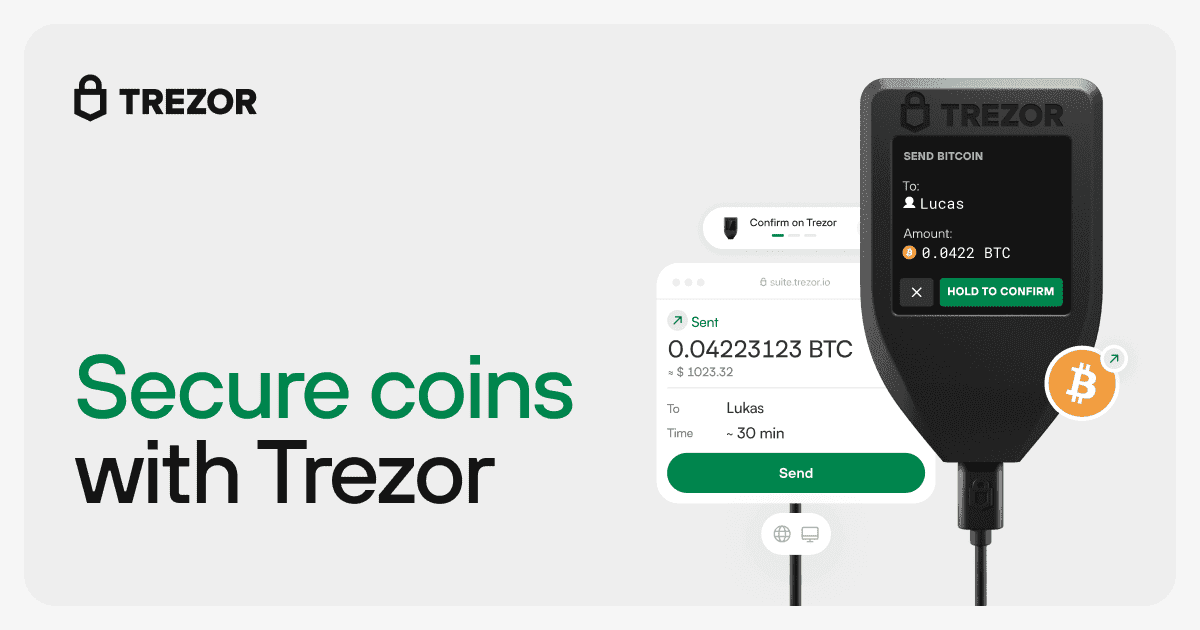
Sending digital assets is one of the most important features in Trezor Suite. The process begins by selecting the cryptocurrency and choosing the account from which funds will be sent. Users enter the recipient address and amount. Trezor Suite prepares the transaction, but it does not sign it. Instead, the Trezor device displays all transaction details, including the amount, the destination address, and transaction fees. The user physically confirms these details on the device’s screen before signing the transaction.
This requirement is intentional and is one of the primary security strengths of Trezor Suite. Even if malware infects a computer, it cannot alter the transaction information displayed on the hardware wallet’s screen. Only after physical confirmation does the hardware wallet sign and authorize the transaction. Trezor Suite then broadcasts the signed transaction to the blockchain.
Receiving Cryptocurrency with Trezor Suite
To receive funds, Trezor Suite generates a receiving address for the chosen cryptocurrency account. Users must confirm the address on their Trezor device to ensure it has not been altered by malicious software. This step prevents address substitution attacks.
Once the user shares the verified address with the sender, they can monitor incoming transactions. Trezor Suite displays pending operations and confirms them once blockchain verification is completed. It also logs the transaction history for each account.
Enhanced Security Features in Trezor Suite
Security is a major focus for Trezor Suite, which provides several layers of protection:
PIN protection required for physical access
Passphrase support for advanced users
Device authentication checks upon connection
Address verification on the device screen
Open-source transparency and independent auditing
Clear warnings about phishing and recovery phrase safety
Trezor Suite reinforces best practices by frequently reminding users to never share their recovery phrase, never type it into software, and never store it digitally. The application also helps users identify potential security risks by monitoring for irregularities.
Portfolio Tracking and Market Tools
Trezor Suite includes portfolio-management features that help users track the value of their holdings over time. The software aggregates all accounts and presents an overview showing the total portfolio value, daily changes, and asset distribution. Users can inspect charts, track performance, and study market trends directly within the application.
Portfolio tools in Trezor Suite include:
Value breakdown by asset
Growth charts and performance history
Transaction activity timeline
Detailed market prices and charts
Customizable account groupings
This makes Trezor Suite both a management tool and a portfolio tracker, removing the need for separate applications.
Staking Capabilities in Trezor Suite
Some blockchains allow staking, which rewards users for helping secure the network through participation or delegation. Trezor Suite supports staking for select assets through integrations with trusted providers. Users can stake assets like Cardano, Ethereum, Polkadot, or Tezos depending on their network preferences.
Staking through Trezor Suite involves the following:
Selecting the staking-supported asset
Choosing a staking provider
Confirming delegation on the Trezor hardware wallet
Monitoring reward accumulation
The user remains in control of their private keys at all times, which preserves the benefits of self-custody while participating in network governance or validation.
Coin and Token Management
Trezor Suite supports a broad range of cryptocurrencies across multiple networks, including Bitcoin, Ethereum, ERC20 tokens, and other blockchain ecosystems. The application includes tools to manage tokens, organize them, customize account labels, and update token information. This simplifies management for users with diverse portfolios.
The application periodically updates to include more token support and improved metadata, ensuring compatibility with evolving blockchain ecosystems.
Privacy Features in Trezor Suite
Privacy is important in cryptocurrency, and Trezor Suite includes features that support private interactions. The application integrates with privacy-enhancing tools like Tor, allowing users to route communications through the Tor network for added anonymity. Additionally, users can enable discreet mode to hide balances on the screen, especially when using the software in public environments.
Transaction labeling allows users to assign notes to operations without exposing sensitive information. These notes are stored locally and not broadcast to the blockchain. Privacy-conscious users also benefit from Trezor Suite’s ability to manage multiple accounts with different purposes, helping to reduce traceability across addresses.
Trezor Suite Desktop vs. Trezor Suite Web
Trezor Suite is available in two versions: a desktop application and a web-based platform. The desktop version is recommended for maximum security, as it runs within a controlled environment and reduces exposure to browser-related vulnerabilities. The web version is suitable for access from different computers but still requires strict adherence to security measures. Both versions offer similar features, though the desktop application is generally preferred for long-term use.
Regular Updates and Enhancements
Trezor Suite receives frequent updates to enhance performance, improve security, add new assets, and integrate new tools. Updates also refine the interface, providing smoother navigation and more intuitive controls. Firmware updates for the hardware wallet are also managed through Trezor Suite, ensuring that users have access to the latest improvements and security patches.
Because cryptocurrency evolves rapidly, Trezor Suite’s update cycle ensures users remain compatible with the latest blockchain standards.
Common Mistakes Avoided by Using Trezor Suite
Trezor Suite helps prevent common user errors, including:
Using unverified receiving addresses
Downloading software from fake websites
Entering the recovery phrase into unsafe locations
Signing transactions blindly without verifying on the device
Confusing the PIN code with the recovery phrase
Sending assets to incompatible networks
By guiding users through correct procedures, Trezor Suite reduces risk and encourages safe habits.
The Role of Trezor Suite in Long-Term Crypto Safety
As cryptocurrency adoption grows, managing digital assets securely becomes increasingly important. Trezor Suite enhances long-term safety by:
Facilitating self-custody
Ensuring hardware-level transaction verification
Providing transparency through open-source code
Integrating with privacy tools
Encouraging best security practices
Protecting users against phishing and scams
In essence, Trezor Suite strengthens the foundation of secure crypto ownership.
Conclusion
Trezor Suite is an essential component of the Trezor hardware wallet ecosystem. It provides a secure, comprehensive, and user-friendly environment for managing cryptocurrencies. This 2000-word plain-text guide explains how Trezor Suite works, its features, security principles, setup process, portfolio tools, privacy protections, staking capabilities, and its overall role in supporting safe and effective self-custody. With a focus on transparency, convenience, and protection, Trezor Suite empowers users to take full control of their digital assets.